Net Zero Transport
Fewer emissions in freight – the road to the net zero economy.
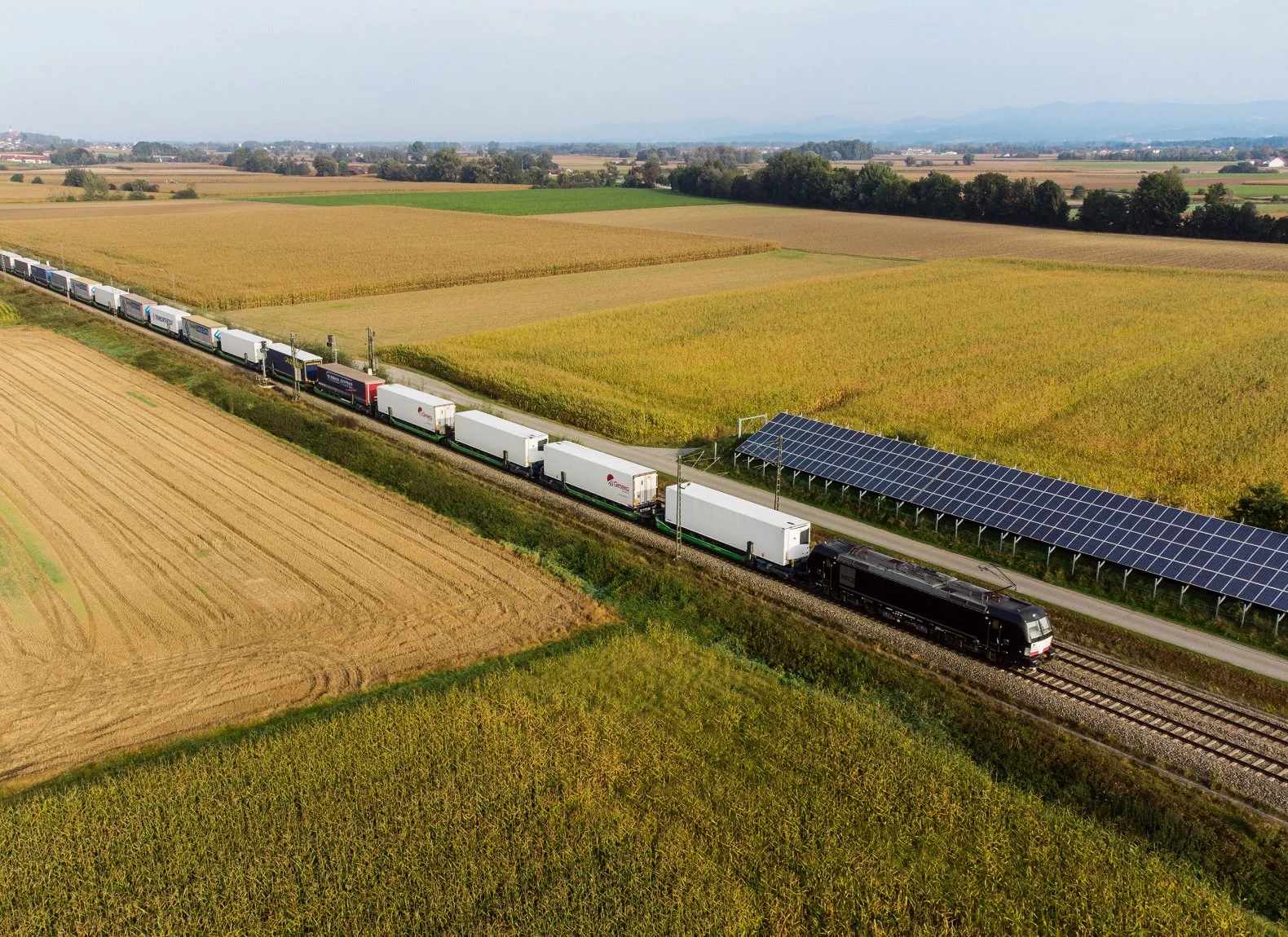
The transition to a carbon-neutral economy needs better transport concepts — without financial or technological barriers. Trailers on rail cut greenhouse gas emissions in freight transport noticeably, with flexibility and operating costs on a par with road.
Request a quoteResponsibility for the future
Time is short
The concentration of greenhouse gases in the atmosphere has been rising since 1990. Global annual emissions run to around 50 gigatonnes of CO₂e. The consequences of an overheating climate are already part of everyday life: extreme weather, droughts and global conflict. People, companies and policymakers share the responsibility for the future.
The progress needed calls for a shift to sustainable economic cycles. The net zero economy is the road to a climate back in balance — and freight transport is a key lever for it.
European climate targets
Two markers for the net zero economy
Europe's climate targets set the frame that business and transport policy are measured against.
2050
The year by which Europe is meant to be climate-neutral — the horizon business and policy share.
-55%
The minimum cut in greenhouse gases required by 2030, against 1990 levels. It calls for a shift to sustainable transport concepts.
The carbon factor in transport
Why the lever sits with road freight
The numbers show where the biggest impact lies: with the truck trailer on the road.
20%
of Germany's CO₂ output comes from road traffic.
74%
of road freight traffic is truck trailers — the biggest lever for a shift to rail.
Our mission
Loading where the freight already is
Until now, the shift to rail has been held back by too few, too costly specialised terminals for loading, often far from the shippers. Barrier-free loading needs no such terminal — a level, surfaced area beside the track is enough.
That makes it possible to set up the loading point close to the freight itself: at the plant, at the supplier, in the industrial estate — wherever the freight already is. It makes the shift from road to rail quicker and simpler, for mid-sized business and industrial supply chains alike.